Discover Otopeni · · 6 min read
A notary for a sale in Otopeni: what they do, what it costs, when to go
What the notary checks on a transaction in Otopeni, who pays the 1% or 3% transfer tax, the fee and the 0.15% registration — and why papers are checked early.
I am not a notary and I do not provide notarial services. I am an estate agent in Otopeni and I go through a notary office on every transaction I close. This page gathers the questions that come up most often before you get there: what the notary checks, who pays what, and when to take your papers in. For a specific case, the answer comes from your notary.
What the notary checks on a sale
The fact that the seller and the buyer have agreed on a price does not mean the deed can be signed the next day. Transferring ownership also has legal conditions, and the notary verifies them.
There can be situations in which the documents or the legal position do not allow the contract to be authenticated straight away. The parties agreeing on the price is essential commercially, but the transfer of ownership also has to meet the legal conditions. — Vlad Sicoie, public notary, in the conversation about paperwork
In the main, what is checked is who holds the right, what the legal position of the property is, and whether the conditions for concluding the deed are met. The exact documentation differs from case to case — so the list below is a starting point, not a recipe.
What the notary costs: the three amounts
- Transfer tax — 3% if you have owned the property for up to 3 years, 1% if you have owned it longer. The notary withholds it at signing, on the value stated in the contract. By law the seller pays it.
- The notarial fee — set in value bands, the percentage falling as the value rises, plus VAT. In market practice the buyer pays it.
- The land registry fee at ANCPI — 0.15% of the value, for private individuals.
One detail that catches people out: if the declared price is below the minimum value in the notarial chamber’s market study, the tax is calculated on that minimum value, not on the price in the contract. How the costs are split between the parties is market practice, not a legal obligation — it is negotiated and written into the preliminary contract. The details, with bands and examples, are in the article on who pays what at the notary.
When to go to the notary: not on the last day
It is far easier to clear up a problem before there is the pressure of a deadline, a buyer or bank financing. — Vlad Sicoie, public notary
Most of the delays I see do not come from the price, but from a missing document found three days before signing. What most often blocks a transaction:
- an unsettled inheritance, or heirs who do not agree;
- buildings and extensions that do not appear in the cadastral documentation — see the conversation about the land registry;
- a mortgage or other charges still registered against the title;
- differences between the area in the papers and the area measured;
- old deeds, with street names or numbers that have changed since.
All of these can be solved. Each one needs time, though, and time is exactly what you do not have when you have a buyer you do not want to lose. The full list of documents is in the article on the papers you need to sell.
What is specific to a transaction in Otopeni
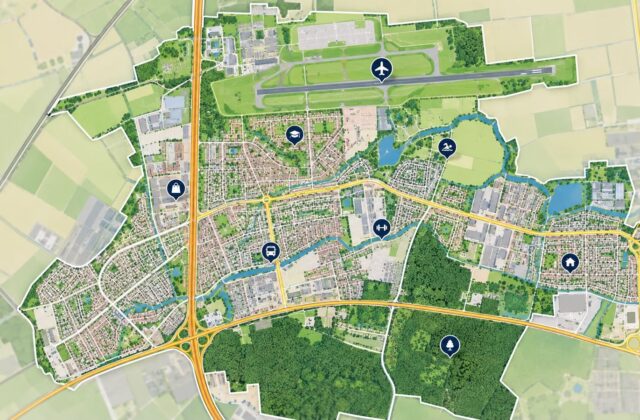
The town grew out of three historical villages — Otopenii de Jos, Otopenii de Sus and Odăile — and only became a town in 2000. That is why, a few hundred metres apart, you will find old houses on large plots with deeds drawn up decades ago, and new developments registered recently. The two raise different problems at the notary.
- Old family properties — this is where an unsettled inheritance comes up most often, along with deeds on which street names or numbers have since changed.
- Houses extended over the years — loft conversions, outbuildings, garages that never reached the cadastral documentation. The house on the ground has to be the house in the papers.
- Agricultural land outside the built-up area — common in Ilfov; the pre-emption procedure applies, with its own deadlines that have to be built into the timetable.
The local context is set out in “Otopeni in numbers” and in the article on the areas of the town.
What I do before we reach the notary
- I go through the list of documents with the owner before putting the property on the market, not after a buyer appears.
- I work with pre-approved buyers, so that the deadlines in the preliminary contract are realistic.
- The terms — price, deadlines, what happens if the loan does not come through — are written into the preliminary contract, not discussed on the day of signing.
Frequently asked questions
What does the notary cost when selling a house?
Three amounts: the transfer tax (1% if you have owned the property for more than 3 years, 3% if less), the notarial fee in value bands plus VAT, and the ANCPI land registry fee of 0.15% for private individuals.
Who chooses the notary, the seller or the buyer?
It is agreed between the parties and written into the preliminary contract. In practice the suggestion often comes from the buyer, because the buyer bears the notarial fee.
Can I sign at any notary for a property in Otopeni?
Ask the notary you have chosen whether they can authenticate the deed for a property in Ilfov — territorial competence is checked case by case, before you book the signing.
What documents will the notary ask for?
The title deed, the cadastral documentation and the registration decision, the land registry extract for authentication, the tax clearance certificate from the town hall, the energy performance certificate and the identity documents of every registered owner. More are added depending on the situation — the full list is in the article on the papers you need to sell.
When should I have the documents checked?
Early, before the property goes on the market. An inheritance or cadastral problem takes weeks or months to resolve, and the deadline arrives exactly when you already have a buyer with an approved loan.
Selling or buying in Otopeni and want to know whether the paperwork holds up before you reach the notary? Send me the details of the property and I will tell you what is still needed.
Sources
- The Fiscal Code (Law no. 227/2015), art. 111 — the 1% and 3% rates and the minimum value in the notarial chamber’s market study.
- Order of the Minister of Justice no. 177/C/2024 — the minimum fees of public notaries, in value bands.
- ANCPI — the 0.15% fee for registration in the land register for private individuals.
- The conversation with Vlad Sicoie, public notary, from the series “The property transaction explained by specialists”.