Conversations with professionals · Episode 3 ·
Mind the paperwork — what the notary checks, and why a preliminary contract is not “just a piece of paper”
Lucian Dima in conversation with Vlad Sicoie, public notary — Notariat Solemnis
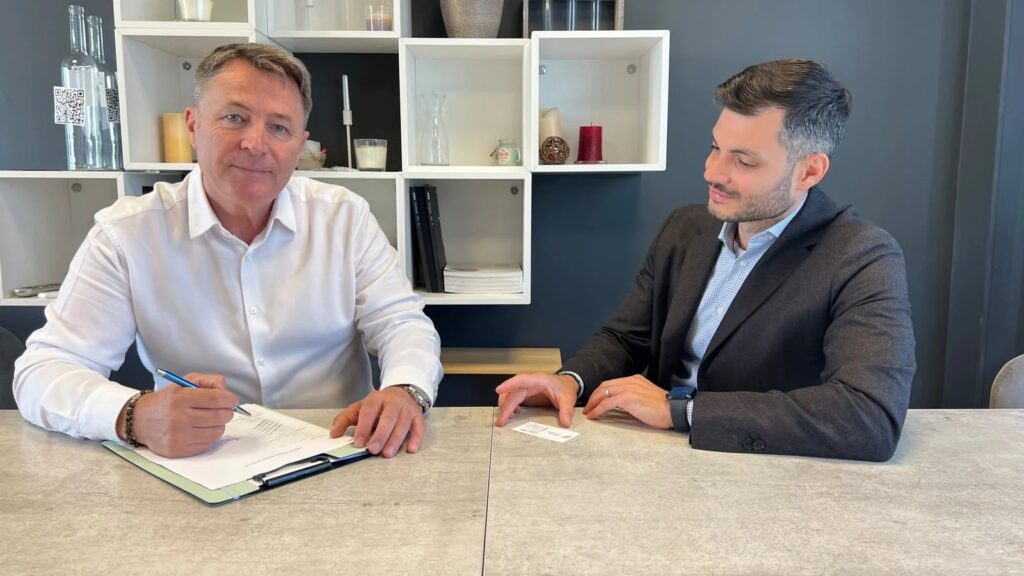
From the series “Property transactions, explained by specialists” — Lucian Dima in conversation with the professionals involved in a transaction.
Lucian: Vlad, we have an apparently perfect case.
I have an owner, I have a buyer, they have negotiated the price, shaken hands and want to sign.
Can the notary say: “We cannot do the transaction in this form”?
Vlad: There can be situations where the documents or the legal position do not allow the contract to be authenticated immediately.
The fact that the parties have agreed on a price is essential commercially, but the transfer of ownership also has to meet the legal conditions.
Lucian: What does the notary check?
Vlad: The checks depend on the particulars of the transaction and of the property.
Principally, it has to be clear who holds the right, what the legal position of the property is, and whether the conditions required to conclude the deed are met.
The specific documentation differs from case to case.
Lucian: One of the lines I hear is: “Lucian, it has been my house for 25 years. What problem could there be?”
Vlad: The fact that a person has used a property for a very long time does not replace checking the title and the documents.
What counts for a transaction is the legal position and the documents that can prove it.
Lucian: But what if the property came through the family and the succession has not been settled?
Vlad: Then the succession has to be examined and it has to be established what steps are necessary before a sale.
It is one of the reasons why the practical recommendation is that the documents are checked before we reach the final stage of the negotiation.
Lucian: There is another situation: the house in the documents no longer looks quite as it did. The owner has built an extension or an outbuilding.
Vlad: Here too the specific position has to be checked.
Discrepancies between the deeds, the cadastral documentation and the actual state of the property may require clarification or additional documents before the transaction.
Lucian: Let us come to the preliminary contract. Many people treat it as just a piece of paper: “We put down €5,000 to hold the house.”
Is it that simple?
Vlad: It should not be treated lightly.
A promise of sale can establish important obligations for both parties: the price, the deadlines, the conditions under which the contract is to be concluded, and the consequences of failing to meet those obligations.
The parties have to understand what they are signing and the effects of the clauses they take on.
Lucian: Especially when the buyer depends on a mortgage.
Vlad: Exactly. The financing position has to be taken into account when the conditions and deadlines are set. The clauses have to be discussed for the actual case, not copied mechanically from another transaction.
Lucian: When should an owner bring the documents in to be checked?
Vlad: Ideally, well in advance.
It is far easier to clear up a problem before there is the pressure of a deadline, a buyer or bank financing.
Lucian: That is what I want people to take away from our conversation: we do not check the paperwork on the last day. We check it before the problem appears.